
Manufacturing Workforce and Apprenticeship
A manufacturing workforce is the shop floor, supervisory and technical people who keep a plant running. HRBS helps Indian manufacturers hire blue collar staff, set up apprenticeships under NAPS and NATS, run bulk hiring drives, and measure workforce cost and productivity so plants stay staffed and stable.
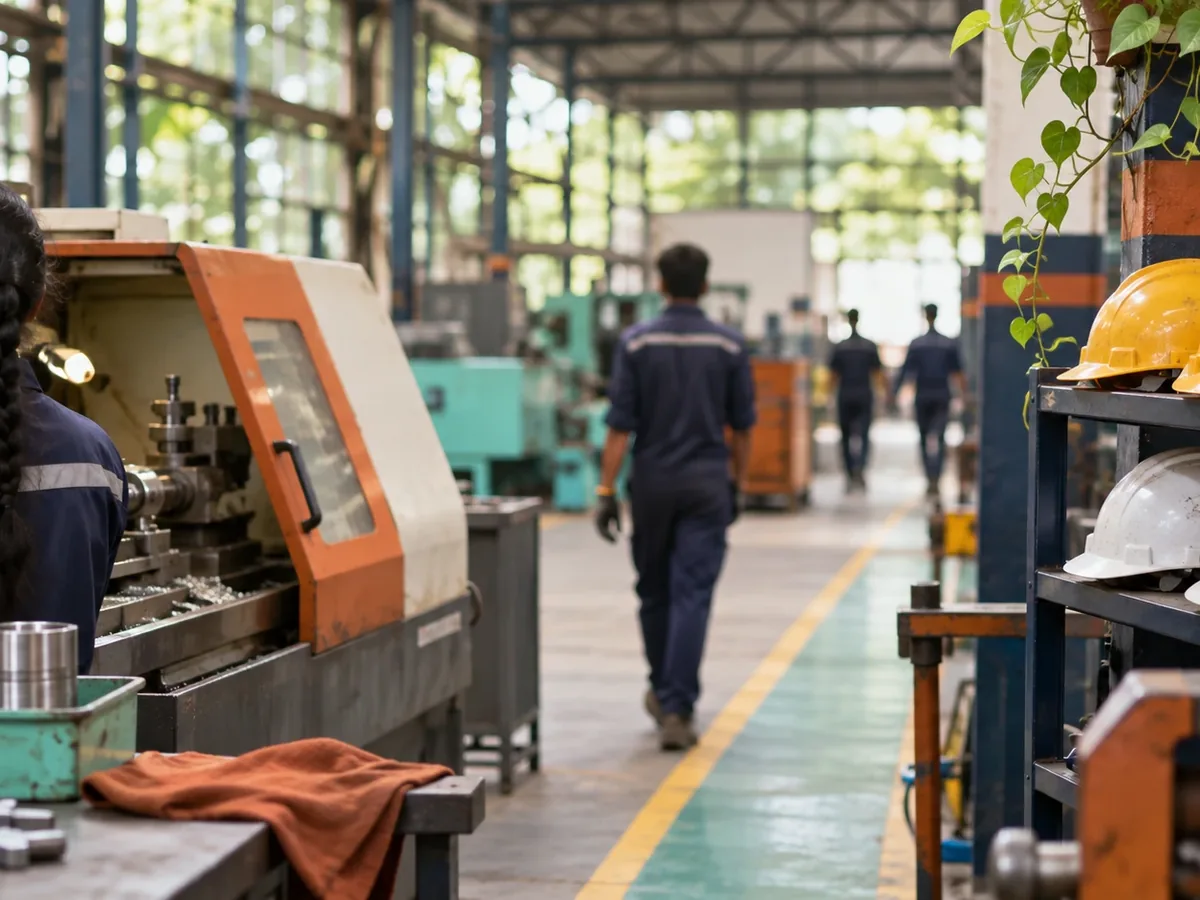
Problems this group solves
- Attrition on the shop floor is high and every vacancy hurts output.
- You need dozens of operators quickly for a new line or shift.
- You want to use apprenticeship schemes but the paperwork and rules are unclear.
- Contract staffing costs keep growing and nobody can explain why.
- Plant managers hire their own way, so quality and cost vary by site.
If one of these sounds familiar, the pages below show how HRBS works on it, what is included and what it costs you.
Who it suits
This group suits manufacturers with one or more plants who hire in volume, run a mix of permanent, contract and apprentice staff, and feel the cost of vacancies on output. It also suits HR heads building a common hiring method across plants.
What is in this group
Each box is a page with scope, process and FAQs.
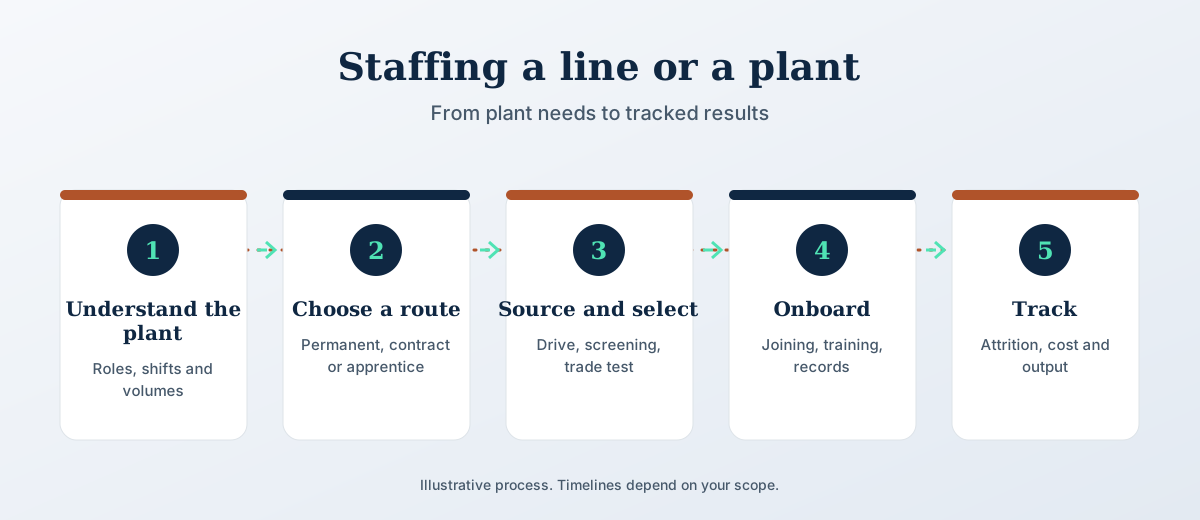
The process in pictures
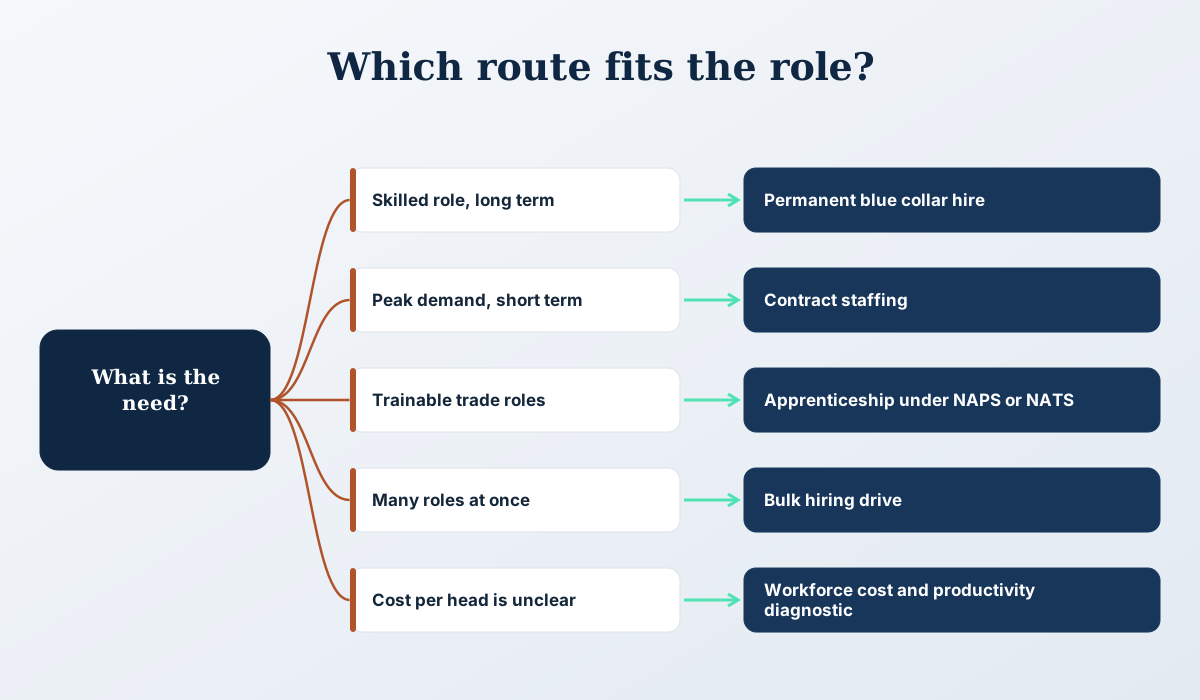
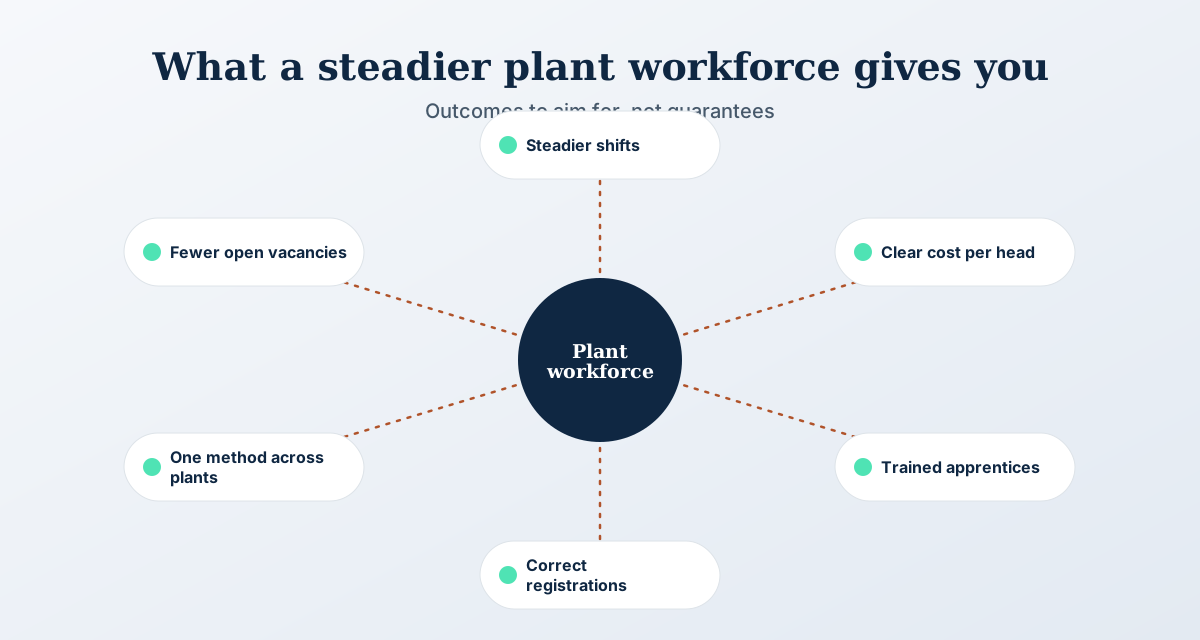
Three views of how this works: the steps, how to choose, and what to aim for.
Manufacturing Workforce and Apprenticeship services in detail
Pick the service that matches your problem, or book a review and we will point you to it.
Blue Collar Hiring, NAPS and NATS
Hiring for operators, technicians and helpers, with apprenticeship routes where they fit the role and the budget.
Read more →StaffingApprentice and Contract Staffing
Apprentice and contract workforce arranged and managed so you can scale a line without permanent headcount.
Read more →Bulk hiringBulk Hiring Services
A set process for filling many roles at once: sourcing, screening, selection days and joining.
Read more →ComplianceApprenticeship in India: NATS and NAPS
How stipend support, registration and reporting work under the schemes, and where employers usually go wrong.
Read more →New pageWorkforce Cost and Productivity Diagnostic
A review of your workforce mix, cost per head and output by plant, ending with the three changes that matter most.
Read more →Focus pageNew Plant HR Setup
HR for a plant that is about to open: structure, hiring plan, policies, contractors and statutory registrations, ready before production.
Read more →Focus pageWarehouse and Logistics Hiring
Pickers, packers, drivers and supervisors hired for real shift patterns, with practical tests and joining-day follow-up.
Read more →What you get with HRBS

Why this matters
A plant feels every vacancy straight away, in output, overtime and safety. The usual response is to hire fast and fix the cost later, which is how attrition and contractor spend get out of hand. HRBS works the other way round. We look at the roles, the shift pattern and the true cost per head first, then choose between permanent, contract and apprentice routes. Apprenticeship can reduce cost and build skills, but only when registration and reporting are done correctly, so we handle those with you.
Related areas: HR Technology, AI and Automation, Talent Acquisition and Employer Branding, Payroll and Managed HR Operations, HR Strategy, Performance and Culture, HR Compliance and Labour Advisory.
How we work
The same four steps run through every engagement in this group.
Manufacturing Workforce and Apprenticeship FAQs
What are NAPS and NATS?
NAPS is the National Apprenticeship Promotion Scheme and NATS is the National Apprenticeship Training Scheme. Both support apprenticeship under the Apprentices Act. The scheme rules change, so check the current position before you commit.
Can HRBS hire a large batch of operators quickly?
Yes. The bulk hiring service uses a fixed process of sourcing, screening, selection day and joining, so you can fill many roles in one drive. Timelines depend on role, location and volume.
Is apprenticeship cheaper than contract staffing?
It can be, because stipend support offsets part of the cost, but it depends on trade, stipend and training load. The workforce diagnostic compares the options for your plant with your own numbers.
Do you work only with big manufacturers?
No. HRBS works with mid-sized and growing manufacturers as well, including those opening their first plant.
How quickly can you staff a new line?
It depends on the number of roles, the skills and the location. HRBS plans the hiring with you and agrees a timeline and batch sizes before sourcing starts.
Is apprenticeship cheaper than contract labour?
Sometimes. It depends on the role, the stipend, training time and how many apprentices stay on. The workforce cost and productivity diagnostic compares the routes using your own figures.
Do you check compliance for contract workers?
HRBS helps principal employers check contractor licences, registrations and payments. The contract labour compliance page explains what is covered.
Not sure where to start?
Book a free HR review. It is a short call, and we tell you which service fits and what to fix first.
Book an HR review